
Nurses, pharmacists, laboratory staff, receptionists and accountants, each with their own list, plus the accounts and roles that decide what any of them can open.
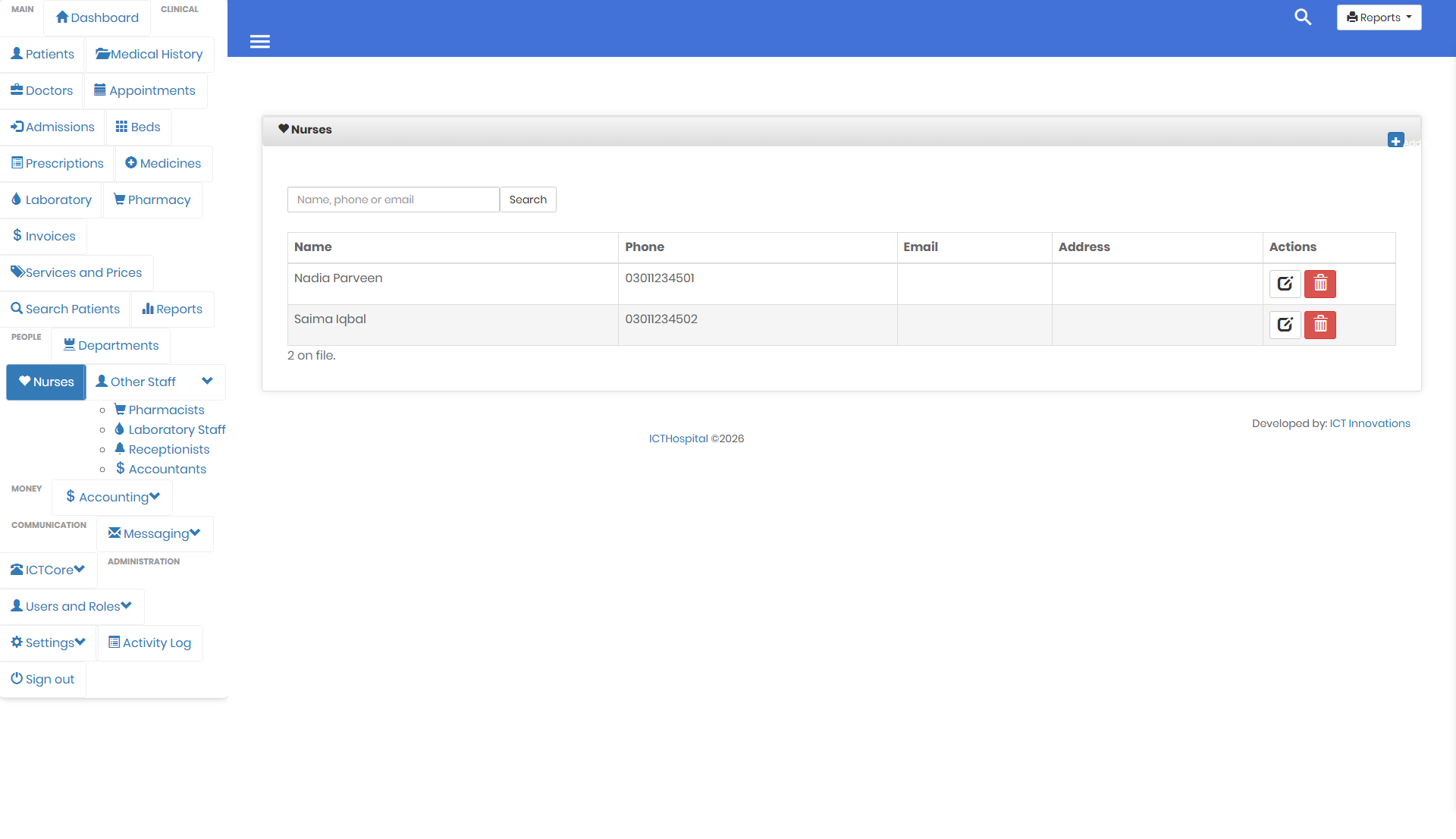
Five staff types share one screen because they share one shape.
One screen, five lists
The five staff types hold the same information: a name, contact details and a photo. They are driven by one piece of code rather than five near-copies, which is why they behave identically and why a change to one is a change to all of them. Only the name is required, so somebody starting on Monday can be added before their paperwork arrives.
Doctors are separate. They carry a department and a qualification, and every clinical screen selects from them, so they have their own register.
Roles decide what people see
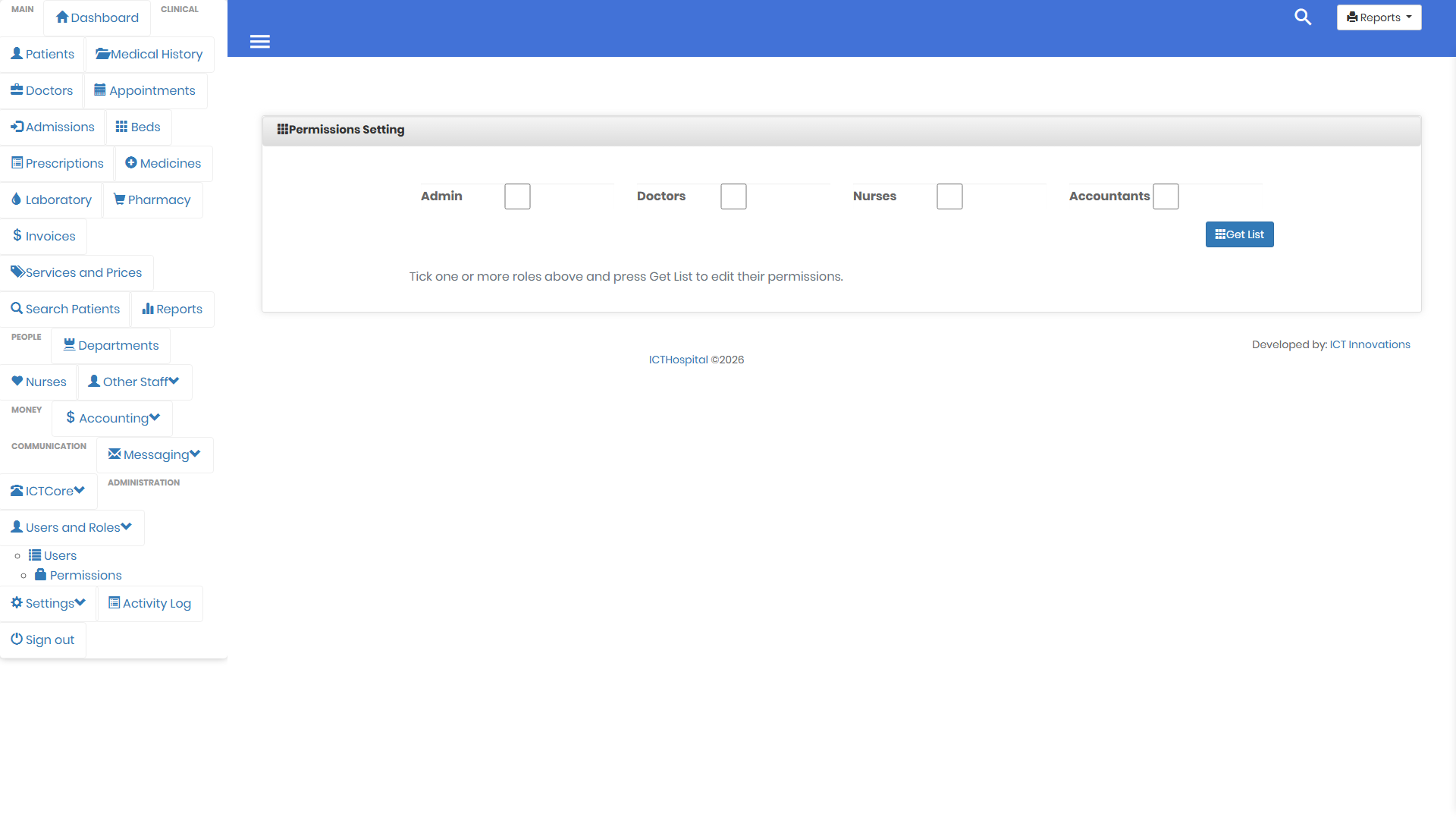
Ninety permissions across four roles, enforced on every clinical screen.
Ninety permissions across Admin, Doctor, Nurse and Accountant. Admin is granted everything when the system is installed; everyone else starts with nothing and is given what they need.
Two details that matter in practice. The permissions are enforced on the routes, not just used to draw the menu, so a link somebody types by hand is refused the same way a click is. And the menu hides what a role cannot open, because a link that bounces you reads as a broken system rather than a deliberate restriction.
Nurses have their own set of permissions, separate from the general staff ones, so ward staff can manage the nursing list without being handed the accounts list.
Every action is logged
The activity log records who did what and when, and it is searchable. It is the first place to look when a record is not what somebody expected.
What is not here
There is no payroll, no attendance and no leave management. Those were in the older product and are not in this one. If you need them, tell us what they have to produce rather than assuming they are there.
See it rather than read about it. The staff and permission screens are in the user guide.
The user guide walks the whole system in the order you would meet it, and the screenshots page has every screen. The source is on GitHub under the GPL v3.